Underfloor heating can be installed in both existing and newly built homes. Whether you use a central heating system , hybrid heat pump, heat pump or are connected to district heating. In this article, we'll discuss water-based underfloor heating. We have a suitable solution for every situation!
What is underfloor heating?
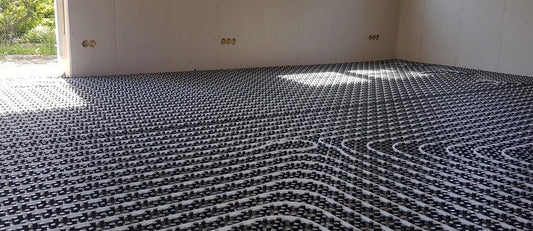
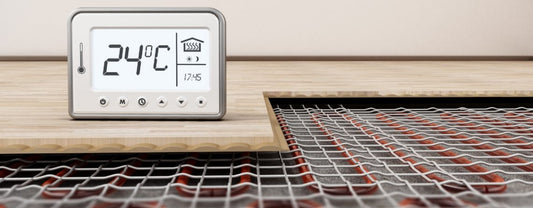
The name says it all, underfloor heating heats the floor. This is done by heating pipes (water hoses) that are laid in the floor. The pipes are laid in a special pattern in or on the floor, and hot water flows through them. The heat is transferred through the pipes to the floor, making it warm. This essentially transforms the entire floor into one large radiator. Because underfloor heating heats such a large area, much less heat is needed per square meter than with traditional radiators. Traditional radiators heat at a high temperature in a specific spot. More heat is needed to heat the house. This is a disadvantage compared to underfloor heating, as you heat at a much lower water temperature. This is good for the environment and your wallet.
How does underfloor heating work?
The heating pipes of the underfloor heating are connected by means of a (mixing) distributor Connected to the primary heat source. This can be an existing central heating system, a (hybrid) heat pump, or a district heating system. The manifold can be considered the heart of the underfloor heating system. With underfloor heating, it is important that the temperature of the water flowing through the pipes is not too high. If the supply temperature from the primary heat source is too high, the mixing manifold ensures that the water flowing into the pipes has the correct temperature. It is therefore important to have the correct distributor This ensures the correct temperature and therefore effective heating of your floor. The cooled return water from the underfloor pipes is mixed with the overheated supply water by the mixing manifold. This cools the overheated supply water, preventing excessively hot water from flowing through the pipes.
For a even heat output is there a maximum tube length of the heating pipes by 100 meters. If you use underfloor heating as your primary heating system, the heating pipes should be spaced 10 centimeters apart. You will then need 10 meters of heating pipe per square meter. To heat a room larger than 10 square meters, several different types of pipes are used. heating groups. It's possible to create multiple groups per room. Depending on the number of groups, you adjust the mixing manifold (regulator) accordingly. The manifold also controls the hot water supply to the various groups.
In this article, we've briefly explained how underfloor heating works. Want to learn more about underfloor heating? Then take a quick look at our knowledge base . Do you have any questions? Please feel free to contact us. contact Contact us. We're happy to help you make the right decision!