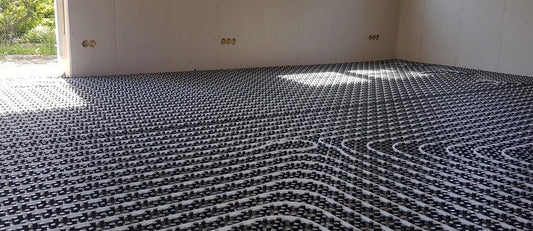
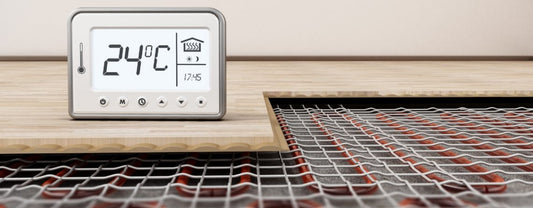
As the name suggests, water-based underfloor heating works by heating water . This heated water then flows through pipes (also called water hoses) that are incorporated into the floor. The pipes transfer the heat to the floor, which makes the entire floor heats evenly . In fact, you turn the entire floor into a large radiator .
The heat for the pipes is produced by your central heating system , heat pump or is provided by the District heating . From the heat source, the hot water flows to a distributor. This distributor (control unit) is the heart of your heating system. The distributor ensures that the hot water flows through the pipes in the floor. Depending on the surface area, the underfloor heating consists of several circuits. Each circuit can have a maximum length of 100 meters. On the distributor, you can adjust which circuits receive more or less hot water. This allows you to accurate different spaces to heat .
Traditional heating with radiators uses water at a high temperature . After all, a relatively small radiator must heat the entire room. Due to the large surface area used in underfloor heating, the heating system does not need to be much less heat per square meter to be delivered. This is why underfloor heating works with a lot lower temperatures than traditional heating. The water in the pipes is heated by underfloor heating between 30 and 40 degrees . An additional advantage of the large surface is the even distribution from the heat. In addition, underfloor heating saves you money energy costs .