Want a new parquet floor and underfloor heating? It's possible! There are a few things you need to keep in mind to ensure your underfloor heating works properly. We'd be happy to tell you more!
Underfloor heating under a parquet floor
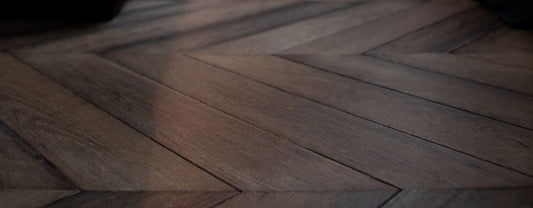
Parquet flooring has been popular for decades. Many different types and qualities of wood are used for parquet flooring. Not every type is suitable for use with underfloor heating. There are also some additional precautions to consider when installing parquet flooring.
Points to consider when choosing a parquet floor with underfloor heating
When choosing parquet flooring, it's important to consider the wood type and plank thickness. The parquet flooring must conduct heat from the underfloor heating effectively to warm the room. Generally speaking, the harder the wood, the better its heat conduction. Furthermore, the wood shouldn't be too sensitive to temperature fluctuations and varying humidity levels.
The best way to install parquet flooring with underfloor heating is with a directly glued parquet floor. Preferred are standard parquet flooring, multi-plank flooring, and engineered wood flooring, no thicker than 16 millimeters and 18 centimeters wide. This type has the lowest thermal resistance (RC value), ensuring the best heat transfer. It's also important to use a special adhesive during installation, suitable for use with underfloor heating.
Suitable types of wood
Oak
Nuts
Merbau
Afzelia
Kambala
Unsuitable wood types
Beech
Food
Jatoba
Use the correct hot water temperature
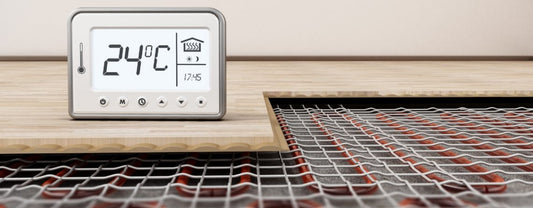
Large temperature fluctuations over a short period of time are very bad for a parquet floor. A parquet floor always needs some free space around it so it can expand and/or contract slightly. If the temperature fluctuates too quickly and too much, the wood can dry out, causing cracks and crevices. Therefore, it's important to set the underfloor heating temperature correctly. The standard water temperature for underfloor heating systems is around 37° Celsius. For a parquet floor, the water temperature should be set to around 28° Celsius. This means the floor and room heat up more slowly, but thanks to the thermal insulation properties of parquet, the floor also retains its temperature much longer.
Do I have a lower return with a parquet floor?
The efficiency of your underfloor heating system depends on several factors. For parquet floors, the thermal resistance (RC value) is the most important factor in efficiency. The lower the RC value, the more heat the floor transmits. This often automatically results in a thinner floor. In combination with underfloor heating, the maximum RC value may be 0.14 m²K/W.
A parquet floor has a higher insulating value than a PVC or tile floor. In addition, the water supply temperature is lower. A parquet floor therefore takes longer to heat up than a PVC or tile floor. The advantage of the higher insulating value is that a parquet floor retains heat better and longer. Therefore, it cools down less quickly. Underfloor heating under a parquet floor therefore provides a constant and comfortable heat output with minimal temperature fluctuations.
Installing underfloor heating
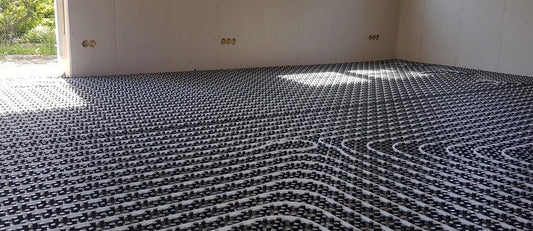
Underfloor heating is almost always possible these days. In new construction, it can be installed directly at the building site, even before the cement screed is laid. If you have an existing building or already have a cement screed, the underfloor heating can be milled into the existing floor. If you are subsequently installing parquet flooring, make sure the subfloor is completely level. A standard finish is often insufficient. Therefore, the floor is leveled first.
Main heating or additional heating
If the RC value is low enough, you can use underfloor heating as your primary heating source. In that case, no other heat sources are needed to heat the room. If the RC value is too high, you can still enjoy underfloor heating, but the heat output will be too low to serve as your primary heating source. In addition to underfloor heating, other heat sources, such as radiators, are needed to comfortably heat the room.