You're installing a new floor (or having it installed) in combination with underfloor heating. Is a PVC floor a suitable choice? We'd be happy to tell you more.
The benefits of PVC floors
Homeowners are increasingly opting for PVC flooring (synthetic flooring). The synthetic material used for PVC flooring offers several advantages. For example, modern PVC flooring is indistinguishable from real wood or stone. Not only do they look the same, they often feel incredibly realistic. Furthermore, they are durable, easy to maintain, and highly compatible with underfloor heating.
Underfloor heating under a PVC floor
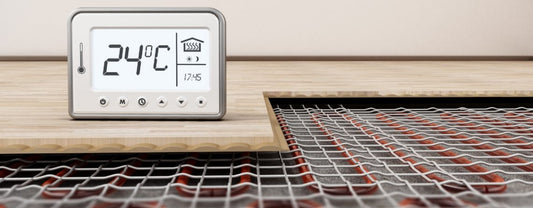
A PVC floor is perfect for combining with underfloor heating. The floor quickly absorbs the heat from the underfloor heating and has excellent thermal conductivity. Little heat is lost during the heating process, meaning you waste little energy. Underfloor heating combined with a PVC floor therefore ensures high efficiency and pleasant living comfort.
The excellent conductivity of PVC flooring makes it a suitable choice if you want to use underfloor heating as your primary heating system. If you choose this option, you won't need any other heat sources besides the underfloor heating, such as (wall) radiators.
Installing a PVC floor
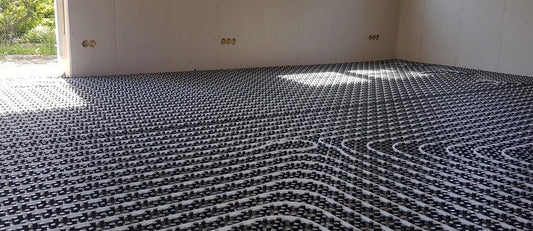
Like most floor finishes, a PVC floor is laid over the screed. If underfloor heating is not yet installed, the underfloor heating pipes are first installed in the cement screed. A smooth subfloor is essential for PVC floors. Therefore, the cement screed is usually leveled first. Once the subfloor has been smoothly finished, the PVC floor can be laid.
The benefits of PVC floors in combination with underfloor heating
- Good heat conduction
- Energy-efficient combination
- Contributes to living comfort